The Importance of Co-Location Racks in Modern Data Center
Owning a private data center sounds good on paper, full control, dedicated infrastructure, no dependency on a third party. But once the bills start coming in construction, power, cooling, security, staffing, the appeal fades quickly for most businesses.
It's not just the upfront cost. It's the ongoing one. Maintaining a facility that meets modern uptime expectations is a full-time operational commitment. Many organizations reached a point where they had to ask honestly, “is this really what we should be spending on?”
Co-location became the answer for a lot of them. Not because it's perfect, but because it made more sense than the alternative.
The Basic Idea Behind Co-Location
At its core, it's a straightforward arrangement. You bring your hardware. The facility provides the space to put it in, the power to run it, the cooling to keep it stable, and the network to connect it. You retain ownership of your equipment. They handle everything around it.
What you're sharing with other tenants is the building and its infrastructure, not the racks, not the hardware inside them. Every organization gets its own dedicated space on the floor.
And that dedicated space, the rack, is what this is really about. Because a co-location rack isn't just any server enclosure placed in a shared building. It has a specific job to do, in a specific kind of environment, and not every rack is built for it.
Why Businesses Are Moving Toward Co-Location
The shift didn't happen overnight. It built gradually as the reality of managing private infrastructure became harder to ignore. A few things have kept pushing it forward:
· Cost Pressure: Finance teams across different industries have started analyzing data center capital expenditure more closely. Redirecting that spend toward core business operations makes more financial sense for a lot of organizations than owning and running a facility.
· Disaster Recovery Requirements: Having a single on-premises server room is no longer considered adequate for business continuity. A geographically separate backup location is expected. Co-location makes that achievable without building or buying a second site.
· Geographic Expansion: Entering a new market often means needing local infrastructure fast. Setting up a full private facility in a new location takes time and capital that most businesses don't have sitting idle. Co-location solves that problem without the long lead time.
· Growing Workloads: Data volumes are climbing, applications are multiplying, and user expectations around availability keep rising. Private infrastructure that made sense three years ago may already be struggling to keep up.
None of these pressures are going away. If anything, they're intensifying. Which is why co-location has moved from being a niche option to a core part of how many businesses plan their IT infrastructure.
What Co-Location Racks Are Actually Expected to Handle
This is where it gets specific. Co-location facilities charge for floor space, often by the rack, sometimes by the cage, sometimes by the cabinet footprint. Space is not cheap. A rack that doesn't use its rack units efficiently, or one that makes cable management difficult, creates real operational and financial friction.
Beyond space, here's what these racks are expected to do well:
· Access Control: Unlike a private server room where you control who walks in, a co-location facility has multiple tenants on the floor at any given time. The rack itself has to function as a secure boundary. Electronic locking, access logging, tamper detection — these aren't optional add-ons. They're expected from day one.
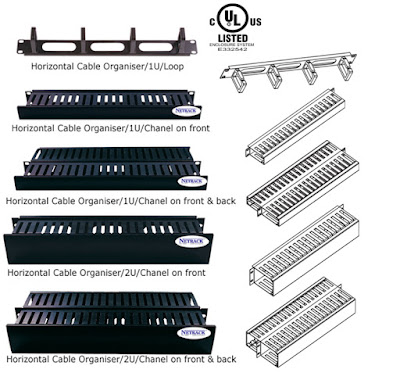
· Cable Management: Different technicians, different organisations, different schedules, all working in and around the same rack at different points. Without a proper cable organisation built into the enclosure, even routine maintenance becomes slower and riskier than it needs to be.
· Cooling Compatibility: Facilities use different cooling setups. Some rely on hot and cold aisle containment, others use in-row cooling or overhead systems. The rack's design has to work with whatever the facility has in place — not against it. Poor airflow design in a shared environment doesn't just affect one tenant's equipment. It can spill over and affect the neighbours.
· Density: More equipment in less space, without sacrificing performance or accessibility. That's the expectation in any serious co-location setup.
Before You Decide on a Rack
A few questions worth going through before committing:
· Does the rack use the allocated floor space well, and can it support future equipment additions?
· How is power managed inside the enclosure — is monitoring included or available?
· Will it work with the cooling architecture already in place at the facility?
· How robust is the locking and access control mechanism?
· Is the build quality solid enough for years of continuous, mostly unattended operation?
These sound obvious. But in the rush to get infrastructure moved and operational, they get skipped more often than they should. And fixing a bad rack choice inside a co-location facility — where space costs money and changes require coordination with the facility team — is a much harder problem to solve than getting it right upfront.
Conclusion
Co-location is a serious infrastructure commitment. The decisions made at the start — including which racks go in — have a way of following you for a long time. A well-chosen rack keeps things running smoothly and quietly in the background. A poorly chosen one becomes a recurring problem that nobody wants to deal with.
Netrack's data center rack solutions are built with co-location environments in mind — designed for high-density shared spaces, manufactured to global quality standards, and
tested for the kind of long-term reliability that these environments demand. If co-location is on the roadmap, it's worth making sure the rack holding your equipment is up to the job.


Comments
Post a Comment